Showing posts with label Old buildings. Show all posts

Thursday, 9 October 2014

DANCE THE FACADE


More dance! As a follow-up of my last post, I got several tips about the phenomenon I now know by the name of site-specific dance. This example is a particularly lovely one, which a dancer (Thanks, Karin!) tiped me of. The performers from Project Bandaloop, suspended in ropes, are using the context of an old stone and terracotta facade as a means to create a new and interesting interaction between body and architcture. The variation between windows and walls become variations in movements, with jumping and landing movements enhanced by the slow speed allowed by the suspension, leading me to speculate about toher ways architects could encourage diffent ways of moving.

"Oakland City Hall 1917" by Oakland Chamber of Commerce, Publicity Bureau - http://imgzoom.cdlib.org/Fullscreen.ics?ark=ark:/13030/kt7199q9d0/z73. Licensed under Public domain via Wikimedia Commons.


The building is Oakland City Hall, designed in the Beaux-Arts style by architects Palmer and Hornbostel and completed in 1914. A steel-frame building, it was damaged in an earthquake in 1989, but had its foundations redesigned to withstand new earthquakes.

Lovely, simple music by William Ryan Fritch.

Saturday, 30 August 2014

NUDE CLASSICISM


No, it's not a library from Fascist Italy. Behold the Leisner Auditorium of the George Washington Univeristy in Washington DC! When everyone else was doing "stripped-down" classicism in DC in the 40s, architects Faulkner and Kingsbury decided to go completely naked with the Auditorium, named after a donor and finished in 1943.

A symmetric building clad in limestone, it only hints at classical roots, with a level of detail some might find to be a bit harsh, while others may think the structure to be strikingly modern and intense in its austerity. I'd call it a guilty pleasure, I suppose. Inhuman and amazingly ruthless though it is, the shadows cast by its narrow porch, the dynamic of the three entrances invisible from each other, and the soft patina of the stone walls in my opinion makes it good enough to deserve its place. If I could make one wish, it would have been for the pillars to be of massive limestone, or at least not as obviously clad in rather thin plates of it.

At night, 1946


The building has been used both for concerts, movie screenings, lectures and debates throughout the years, and continues to function as a gathering place in modern day DC.

River Horse, 1996


In front of the building stands the sculpture called River Horse (artist unknown), given as a gift in 1996. A plaque on the base reads

Legend has it that the Potomac was once home to these wondrous beasts.
George & Martha Washington are even said to have watched them cavort in
the river shallows from the porch of their beloved Mount Vernon on summer evenings.
Credited with enhancing the fertility of the plantation, the Washingtons believed
the hippopatamus brought them good luck & children on the estate often attempted
to lure the creatures close enough to the shore to touch a nose for good luck.
So, too, may generations of students of the George Washington University.
Art for wisdom,
Science for joy,
Politics for beauty,
And a Hippo for hope.
The George Washington University Class of 2000
August 28, 1996

Wednesday, 26 February 2014

STUMP HOUSE


To live in a stump house! How wonderful is this? From the Jim Linderman collection, who also published a book of arcane americana, with this picture and many others.

Wednesday, 19 February 2014

HURVA AND THE POWER OF RECONSTRUCTION

Main facade


Earlier today, my friend Anita sent me an article about the Hurva Synagogue in Jerusalem. Dating back centuries, it was reconstructed and re-opened in 2010, after having lain in ruins since 1948.

Actually, the building has been torn down several times, thus earning its name, which means "ruin" in Hebrew. However, it's also been rebuilt, time and time again, not at least because of its importance as a symbol for Jewish presence in Jerusalem and Palestine throughout the ages.

This also meant that the reconstruction was seen as a provocation by parts of the Arab population, who protested the re-opening, claiming that it was the start of a campaign to conquer Jerusalem on behalf of the Jewish people, eventually leading to Israel destroying landmarks of Arab presence in the city.

For others, however, the reconstruction meant recovering a missing piece of the puzzle that is Jewish history. The old synagogue was a symbol of Jerusalem itself, and many later synagogues around the world were modelled on its neo-byzantine design. Getting it back, meant that a memory once again became reality.

This blog is mainly about architecture, not politics, but it's interesting to see how the erection of a building has very different meanings, depending on who you're asking. The Hurva Synagogue is also a prime example of how important historical buildings and cities are to our identities, even when they are (almost) completely rebuilt.


The ruin, 1967


Interior of the building, clearly showing where parts
of the old ruin were incorporated in the new structure.


All pictures: Wikimedia Commons

Sunday, 19 January 2014

TARKHANY


Picture by Wikicommons


At the time when I started this blog, I wrote a few posts about the wonderful wooden architecture of Russia. Large manor houses, churches and villages are all part of a great tradition which is not well-known in the West, but includes both very classical buildings, and those inspired by vernacular architecture.

Rear view. Picture by Wikicommons.


The example of the day is the elegant and charming estate of Tarkhany, which was constructed around 1800 in the region of Penza Oblast, in Western Russia. Currently a working museum, the manor house and the surroundings were originally a family residence, containing such necessities as a church, fish ponds, fruit gardens, a domed garden pavilion, avuenues of lime trees, several cottages for the workers, and a mausoleum.

Tarkhany garden pavilion. Picture by worldwalk.info

Pavilion dome detail. Picture by worldwalk.info


Tarkhany was also the home of the famous Russian poet Lermontov, and the museum still contains many of his belongings in the period furnished rooms of the houses.


Cottage at Tarkhany. Picture by worldwalk.info


I want a porch like this one. Picture by Wikicommons


Thursday, 7 November 2013

GROCERS' APARTMENTS or HOW TO LOOK FLIRTY AMONGST TIMBER FRAME BUILDINGS


As I hinted earlier, I recently went to Hamburg. One of the greatest places I visited, was also one of the smallest, a tiny street inside a complex called the Grocers' Apartments.


Photo: Wikimedia Commons


On a tiny plot, this group of 17th century timber frame houses creates a world of its own, twisting and leaning and bending in all directions.

(Add some curly hair, oxfordesque attire and a hand on the chin, and you've accomplished what you wanted to, more or less.)

Friday, 11 October 2013

FICTIONAL FRIDAY: MEDIEVAL PHILOSOPHY


I somehow stumbled upon the Norwegian version of Wikipedia's article about Medieval philosophy earlier today. This is the complete set of illustrations. Weird stuff.

Thursday, 3 October 2013

THE MAN IN THE WINDOW


Walking home from a great day spent with my friend Aina (Remember the girl with all the talent and charm?) and her cool little brother, I had to take a picture when I passed this great sight: An elderly man, just hanging out of his window in the sunshine, looking at people and cars passing by. I don't think he talked to the girls, but it seems he at least made eye contact with one of them.

I believe good architecture will do this to a city. Windows which open up wide encourages people to look out unto the outside and get some real sunshine on their skin. The wall is pierced by the sudden gap in the facade, and a potent meeting between private and public takes place. A road without too many cars is nice to look at, while the trees across tha road cast an interesting shadow. The street becomes a nicer and more interesting place to walk, and so a few people might choose to not take the car. Urban magic.

Monday, 30 September 2013

ICH BIN EIN HAMBURGER


Yours truly at Hamburg Hauptbahnhof earlier today. The building was constructed in 1906, designed by architects Heinrich Reinhardt and Georg Süssenguth, based on the Galerie des machines. Hamburg is an nice place, and the burger was tasty.

Thursday, 26 September 2013

VINEYARD CLASSICISM


This facade is amazing. Simple, and yet intriguing. I suppose the thick stone walls are keeping the wine cold, while the arches and niches make it interesting. The building doesn't really look like a château to me, but it's supposed to be the vineyard Château Mouton-Rothschild in Médoc, Southern France. (Study trips are a great occasion for discussing (and drinking) wine.)

MIDNIGHT CITY (ARRIVAL IN HAMBURG)


Midnight City from M83 on Vimeo.


Waiting in a car.
Waiting for a ride in the dark.
The night city grows.
Look and see her eye, the glow.
Waiting in a car.
Waiting for a ride in the dark.
Drinking in the lounge.
Following the neon signs.
Waiting for a roar.
Looking at a mutating skyline.
The city is my church.
It wraps me in the sparlking twilight.
Waiting in a car.
Waiting for the right time.
Waiting in a car.
Waiting for the right time.
Waiting in a car.
Waiting for the right time.
Waiting in a car.
Waiting for the right time.
Waiting in a car.
Waiting for a ride in the dark.

Wednesday, 4 September 2013

MYSTERIOUS COURTYARD


Isn't this the most wonderful backyard you've seen in a while? Not very classical, but very welcoming and charming, in some inexplicable way. The picture was taken earlier this summer in Grønland, Oslo, by a friend of mine who lives in one of the buildings surrounding it.

I'm not quite sure what the white, fog-cottonish stuff is, but Lina seems to believe it's pollen. I think it might be poplar seeds, but I'm not sure. Looks cool, though, don't you think?


Saturday, 31 August 2013

JENNY BEVAN AND THE SHADOW OF ARCHITECTURE


Here's a photo taken some time ago in Charleston, South Carolina, by the brilliant young architect Jenny Bevan.

So, consider this: How interesting are the shadows cast by the architecture you make?

Wednesday, 17 July 2013

CLASSICAL SUBSTATION BUILDING


Walking around my home town today, I just had to take a picture of this wonderful little structure. Architect and year is unknown, but I would guess it's from around 1920, and probably not yellow originally.

There doesn't seem to exist any kind of building which can't be executed in a classical manner, does it?


Tuesday, 16 July 2013

REVIVAL


The Deichman library in Oslo. Liberal Greek revival, Nils Reiersen 1933.


During the course of architectural history, it has happened any times that the aesthetic ideals of an early period have once again become important. Different styles, such as Gothic, Egyptian, Baroque and not at least, Classicism, have haunted the drawing boards of architects in different versions even up until today.

Bragernes church in Drammen. Backsteingotik revival,  Ernst Norgrenn 1872.


Viewing something from a distance provides a person with a certain clarity, an overview which can be hard to obtain when you're in the middle of it. For this reasons, revivals can, in my opinion, be just as great as the originals, although maybe in a different way. Taking a step back has its drawbacks, but that shouldn't be a reason to back off and not to try to do something which you believe would be great.

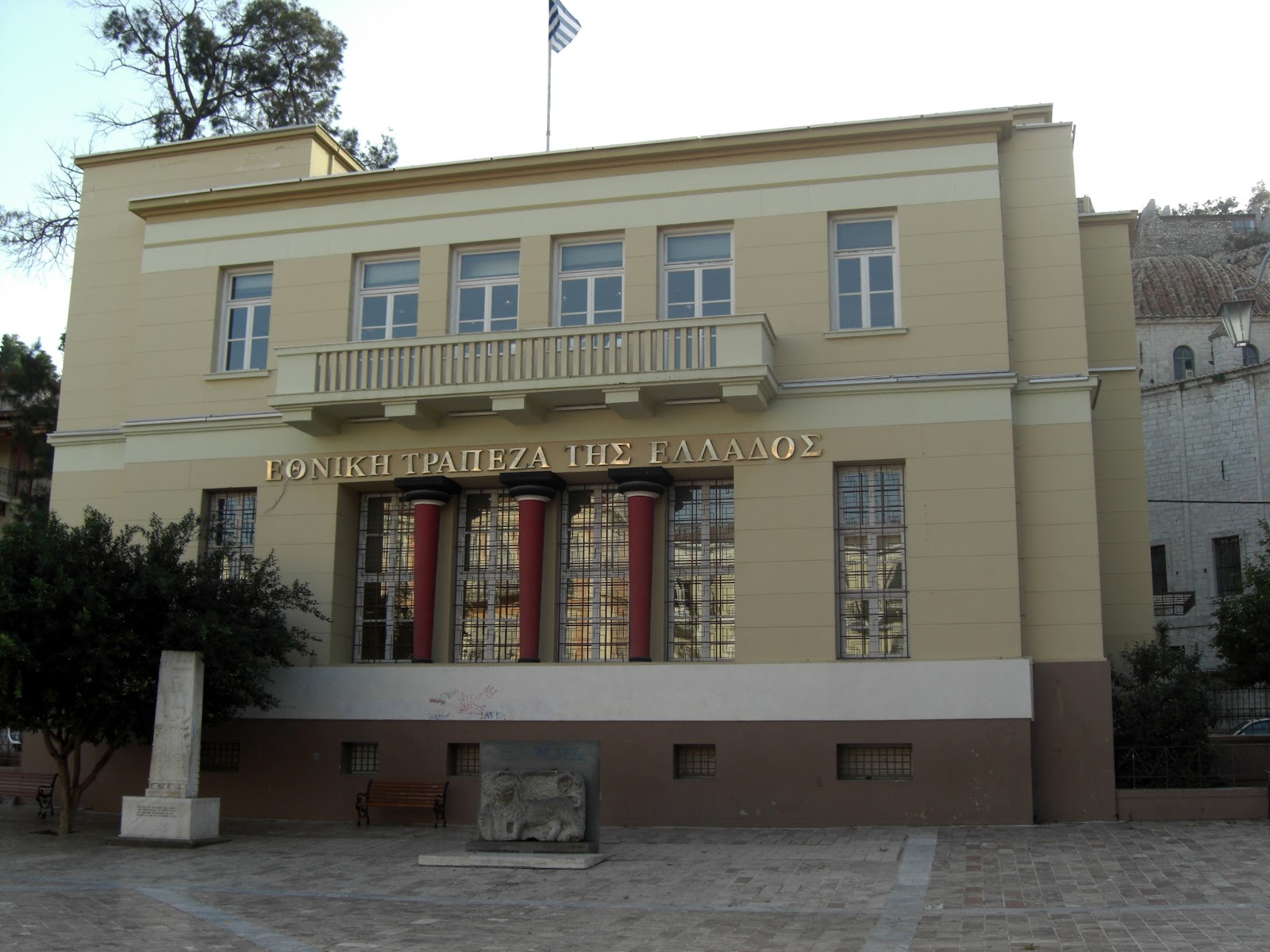
National Bank of Greece in Nafplio. Mycenaean (!) revival, Zouboulidis ca 1930.


 This blog has been dormant for many months now, not unlike an architectural language which is abandoned in favour of another, but still stays there, behind the curtains. And this is my attempt at a revival of what Not Another Architecture Student has been. Throughout three years of studies, the blog has been my incidental diary for architectural discoveries, a place to scribble down new ideas, a channel for pouring out love and hate in the realm of buildings and cities, and a way to come in contact with some interesting people.

Helga Eng's Hall, Blindern. Playful functionalist revival, LMR arkitektur 1994.


 I have now finished the first part of my masters degree in architecture, equivalent to an undergraduate or bachelors degree. During the year to come, I will work full-time as a paid intern in a very interesting architectural firm called LMR arkitektur. Although a relatively old company, they are a curious and innovative bunch, and I'm looking very much forward to learning from them and contributing with what I may have.

University library at Blindern. Monumentalist revival? LMR arkitektur 1999.


In the year to come, this blog will again become important. Moving home to Oslo will provide me with a new perspective, and new objects to investigate. One of the places I really want to explore, is the university campus, which goes by the name of Blindern, named after the former farm whose land it now occupies. This is a strange and wonderful place, full of ugly buildings and beautiful parks, loved by many for their contents and by few for their looks and interface. I will probably return to Bergen next fall, but I'll also apply to do my masters at other schools, so nothing is certain. Wish me luck!


Yours truly,

K

University library at Blindern. Treetrunk revival? LMR arkitektur, 1999.


PS. Fictional Friday will be back, too!

Wednesday, 13 March 2013

COMPLEX BUILDING

Today was the start of our mini-diploma: the complex building course. Over the next three months, the class will be exploring, investigating and finally redesigning parts of Haukalnd University Hospital in Bergen, Norway. This is the concept sketch I presented:


Wish me luck!

Wednesday, 27 February 2013

PINK CHURCH


I don't always go to church on Sundays, but when I do, it's a pink church.

I really wish that was true.

Chesme church by architect Yury Felten in St. Petersburg, Russia. Picture credits: Wikimedia Commons (where it was the picture of the day today/yesterday, depending on where in the world you are).

Sunday, 6 January 2013

INSIDE THE TOWER


Happy new year! The world didn't end this time, either. The above picture was taken by yours truly in September, in a strange room behind the clocks of the tower of Nykirken ("The New Church") in Bergen:


I like how things sometimes are much more weird than we believe them to be.

Related Posts Plugin for WordPress, Blogger...