Showing posts with label Sculpture. Show all posts

Tuesday, 20 January 2015

THE UNITED STATES OF IN-YOUR-FACE

Pavillion of the USA, World's fair 1900, Paris


Not exactly my definition of beauty, but it sure makes a statement. 1900 must have been a strange time to be alive.

Thursday, 25 July 2013

PALAIS D'ELECTRICITÉ


Ah, those were the days! At the 1900 world's fair in Paris, also called the Exposition Universelle, architectonical decoration was still (very) allowed, and stylishly dressed people would marvel at the amazing new world that the coming century would bring. They had no idea what they were up for.

This optimistic and even enthusiastic buildings was the Palais d'Electricité, simply celebrating the wonder of electricity, which apparently is closely linked with the concept of the semicircle.

One thing is for sure: They don't make 'em like this anymore.

There, right between the legs of the Eiffel tower (which was constructed for an earlier world's fair)


Picture credits: Wikimedia commons

Friday, 31 August 2012

FICTIONAL FRIDAY: OLYMPUS OF "IMMORTALS"


Fictional Friday is a series of posts on my blog, where I present fantastical and fictional architecture from books, television, films, computer games, art etc. every Friday.

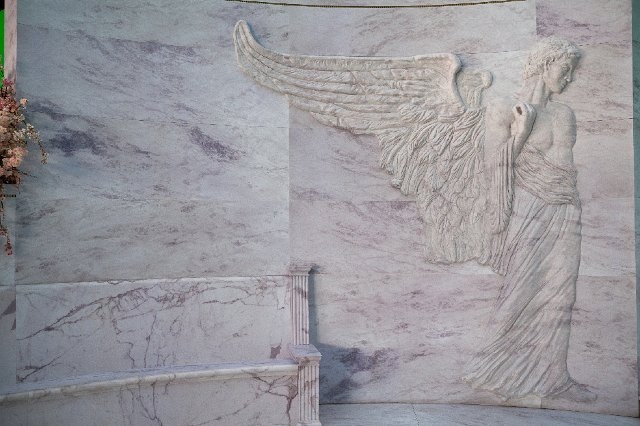
This week, something for those of you who just can't have enough of inventive Classicism: In the otherwise unimpressive film 'Immortals', there was a rather beautiful set, designed for Olympus, the home of the gods. Imagined as a synthesis of unpolished marble, symmetry and geometry, this amazing piece of fictional architecture reminded me of the stark and beautiful Nordic Classicism (sometimes referred to as 'Swedish Grace') of the 1920s. Have a look, ignore the silly costumes, pay notice to the nice Lucie Fournier relief and make up your own opinion:


Thursday, 19 July 2012

PINE HORIZON


You might have heard of the pines of Rome, but what about the pines of Skjeberg?

As some old readers may have noticed, I'm very much concerned with how the architecture we create, meets the sky. In nature, the horizon is never boring, but in architecture, it often is. So maybe, the next time you're out there shaping a part of your fellow citizens' horizon, in the shape of a roofline, a garden or a tree-lined street, and you think it looks too simple, maybe you should consider using a pine? They grow into all kinds of shapes and sizes, smell nice, and produce cones than are fun to play with.

As for the picture, it looked better the way it was taken, a bit tilted, and depicts me and my friend Freja-Lina in between all the pines.

Monday, 23 April 2012

BISLET PUBLIC BATH


My sister and I went swimming yesterday!


In 1915, architect Harald Aars won the competition for the design of a new public bath in the neighbourhood in Oslo called Bislett. Construction of the brick-walled, concrete-floored building was completed in 1920, and it's still in full use.


The facility was considered to be among the most modern and advanced in Scandinavia at the time, and  the "Classicism meets Nordic New Baroque"-architecture suggests a temple of health and natural well-being for the whole population, for whom bathing was considered a privilege at the time, but also necessary to combat diseases, and to provide exercise and "strengthening of the body". For an illustration of the Norwegian people, pay notice to my sister, standing in front of the car in the above picture.


The whole building, including sculptor Anders Svor's statue "After the Bath" outside the main entrance, is protected by the strictest Norwegian preservation laws, called "fredning". (Sorry about the Coca-Cola logo being included in the picture; I don't even like that company, as they're mean to Indian farmers.) It was owned by the municipality of Oslo until 2005, when the right-wing city government sold it off at a loss. It is now owned by a famous Norwegian investor, and is well-managed by friendly people. The alterations done to modernize, however, are crudely done and aesthetically offensive and/or uninteresting. The investor, Olav Thon, is known for not caring too much about old buildings and sabotaging preservation.


There are several artworks throughout the building, including more statues and stained glass windows. It appears not all of them have titles.


There's also an old clock at one end of the main hall, hand painted and signed "H. I. KNOPH, KRISTIANIA", Christiania/Kristiania being the name of Oslo in the period 1624-1925.


The old changing stalls, seen to the right in this picture, are made from wood and painted pink. They're not currently in use. The railing is made from poured concrete and terrazzo, borrowing its organic lines from the Baroque.


The walls have beautiful ceramic and marble tiles. (I prefer the ceramic ones, as the marble tiles are too shiny, and don't look they were there from the beginning.)


The building also has lots of corners and winding paths and nooks, like this one, just above the entrance. Currently, it is occupied by a chair and an electronic plastic object telling about workout hours. I wonder what the space was used for originally?


The main hall has a glazed ceiling and is lit mainly by natural light, and almost all the other rooms have big windows with opaque glass, admitting generous amounts of sunshine. I also like the slightly absurdly detail of having two clocks, which also underlines the weird symmetry.

Bislet public bath (that's "Bislet bad" in Norwegian) is definitely worth a visit if you're in Oslo, and not too expensive to visit. Apart from the interesting architecture, it also has a pool with a counter-current, a jacuzzi, saunas, yoga classes and nice hot showers.

Friday, 3 February 2012

SWEDISH KING

I found this in the Swedish National Museum. I forgot to write down who it was, but I guess it's a king or something.

And now, have a look.

Normal king:


PSYCHO king:


Conclusion: Be careful when choosing your "good side".

Monday, 30 January 2012

AVANT-GARDE/COMPLEXITY 1929


He apparently saw this before anyone else:


Plan Voisin, which tearing down a large part of central Paris, replacing it with a highway and huge tower blocks. 1925


"The real effect of M. Le Corbusier's proposals is an over-simplification of the city(...). M. Le Corbusier's solution is to do away with the complexity. This complexity, however, is part of the subject of civic design. The modern great city is like a large orchestra wich often plays an inferior piece of music, and in which the instruments themselves may occasionally even be out of tune. It is the business of a reformer to improve the music and the instruments, but not to cut down the range of the orchestra, nor the number of musical effects that are aimed at by it. M. Le Corbusier has not the patience to attempt this, but substitutes for this orchestra a single tin whistle with about five notes, with which he plays a perfectly rythmical tune. But it is not enough."

- A. Trystan Edwards, The Dead City, in: The Architectural Review, vol. 66, 1929, pp. 135-138


Plan Voisin, model


Why didn't you listen?


Friday, 14 October 2011

WHAT YOU'LL HATE IN TEN YEARS


(Maybe you already do?)

Military History Museum in Dresden, with an addition by Daniel Libeskind.


"The new façade’s openness and transparency contrasts with the opacity and rigidity of the existing building. The latter represents the severity of the authoritarian past while the former reflects the openness of the democratic society in which it has been reimagined. The interplay between these perspectives forms the character of the new Military History Museum" Ouch. Daniel... please, just... shut up.

Friday, 16 September 2011

THE ANT, THE ROCK AND THE KING


While I was sitting and reading the newspaper at sunset today, I befriended an ant. The ant lived in a rock in the middle of the city. Do you see the ant? (Click on the picture to see a bigger version.)


There are a few steps in the rock. The ant is very small, but he's still able to climb them; maybe because he has six legs.


The rock stands here, in the middle of a big pile of gravel. I wonder how the ant got there in the first place, and if he ever will leave it. Amazing, really; it seems life is everywhere. On the top of the rock is a king and his horse, but they're both made of bronze, so I don't think they bother the ant very much.

Tuesday, 12 July 2011

BOOK COLUMN


How to make a book column


You need:

1 unsightly column
1 Polish guy
Lots of books with titles which make people interested
Glue
Nails
Saw

Start from the bottom. Saw the books in half to make them fit. Glue and nail them to the base and the column. Repeat with new layers until you reach the ceiling.

Voilà! The world is now a better place.

(The picture was taken by yours truly in a Volt shop in Karl Johans gate, Oslo.)

Friday, 27 May 2011

HENRY GIBSON


I really think this sculpture by Nils Aas (situated next to the magnificent theatre Den Nationale Scene, built in 1909 by architect Einar Oscar Schou) (oh, and have a look at the walk of the man in background as well), presumably trying to depict Henrik Ibsen, is the ugliest (ugly, as in "caricature-like in all its grumpiness and resembling a very indecent mix between a children's toy and a dildo") piece of figurative art I've ever seen. 

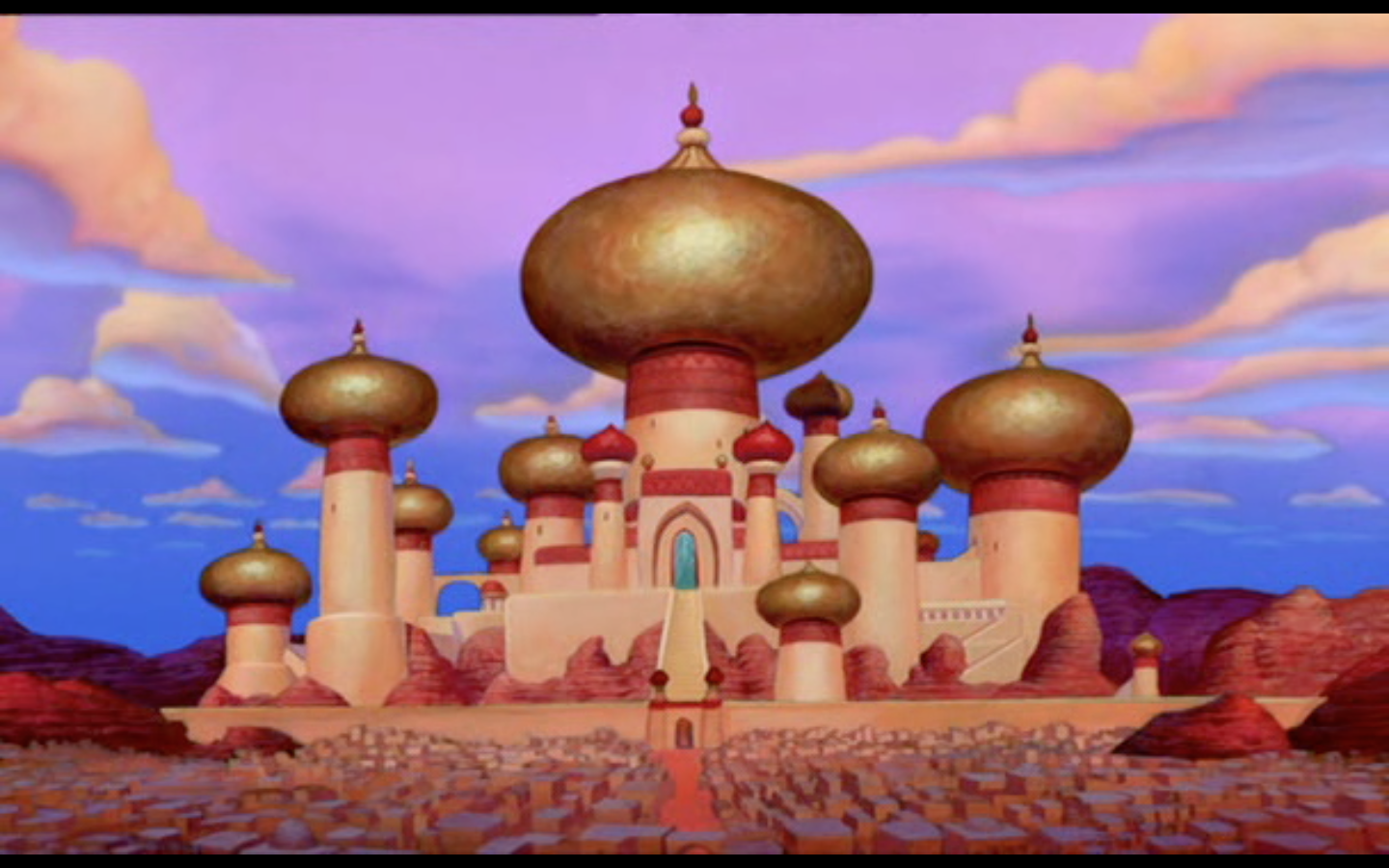
... unless, of course, it's really a statue of the guy who governs this place:


The Sultan of Agrabah!

Thursday, 3 March 2011

DESK STATUS/NOT A LLAMA


No, it's not a llama. As the bandsaw at school is broken again, the pieces of wood I planned to make houses of were suddenly quite useless, and I just stacked them on top eachother to clear a small part of my desk. I love stacking.

Sunday, 27 February 2011

STEINER


Celebrating Rudolf Steiner's 150th birthday, I'm posting a picture of his Goetheanum, the centre of the antroposophical movement. Steiner had ambitions of creating a spiritual and organic architecture, avoiding right angles as much as possible, and using cast concrete to create rounded and expressive (and sometimes perhaps a bit overwhelming) shapes. I think we still may have things to learn from him.

Sunday, 19 December 2010

NEVERENDING STAIRS


They may not be extremely useful, but they're quite good-looking. According to the picture, which I found on Wikipedia, they're somewhere in Munich.

Tuesday, 26 October 2010

ANE OLINE/ CONTRASTING MATERIALS


How do you show a solid timber wall

The last week of September was devoted to the not-at-all-ancient art of Visual structure (see the first blog post about visual structure). One part was the familiar assignment of contrasting materials. This time, however, it was on another scale, working with walls, big piles of sand, piles of wooden planks and the like. We grouped into pairs, and I collaborated with my dear classmate Ane Oline Finstad.

An intelligent woman, wonderful to work with. (Loves horses.)

All pairs were given an object in some part of the school grounds, and we wanted to work with the wall. As we had learned the last time we worked on visual structure, one way of showing an object is to contrast it with an object of a totally different materiality. In order to make our wall even more visible, we decided to surround the middle of it with a lighter, non-geomtrical figure. Here's a sketch I drew during our first discussions.


What we did, was to find as many contrasts as we could. The wall was geometric, the clouds were blobby; the wall was matt, the clouds were shiny, the wall was one object, the clouds were several objects; the wall was planted firmly on the ground, whereas the clouds seemed to be floating, at least hanging, etc., etc. Our classmates seemed to think we ended up making the wall a lot more visible, in a quite beautiful way, and I can't help but agree.

EDIT 24th October 2011: Removed the picture of Ane Oline. Still love her, though.

Tuesday, 19 October 2010

THE ARCH

Vegar and I built a catenary arch (Yeah, that's the kind Gaudí used to make.) during the stone course in September. This film by one of the course teachers, sculptor Lukas Arons,  shows tha last minutes of finishing the arch. Vegar and I are moving around and fixing the keystone, while sculptor Asbjørn Andresen, one of the other course teachers, is giving directions.


(Damn! I never get these Youtube videos to fit the format of the blog.)

Tuesday, 24 August 2010

SUNSET AND GRUMPY BOY


I left the bookshop just in time to see this play of colours across the sky and the city filled with an extraordinary light, around nine this evening.


Everyone seemed to enjoy it, perhaps talking a little lower, walking a little slower, except this boy cast in bronze. He always looks grumpy, and I can't really blame him. All summer, the fish are spitting water on him, and all winter, he just looks really cold.
Related Posts Plugin for WordPress, Blogger...